Hydroseeding
A cost-effective alternative to sod for thick, healthy lawn establishment
We Specialize In Professional Hydroseeding Services in Victoria
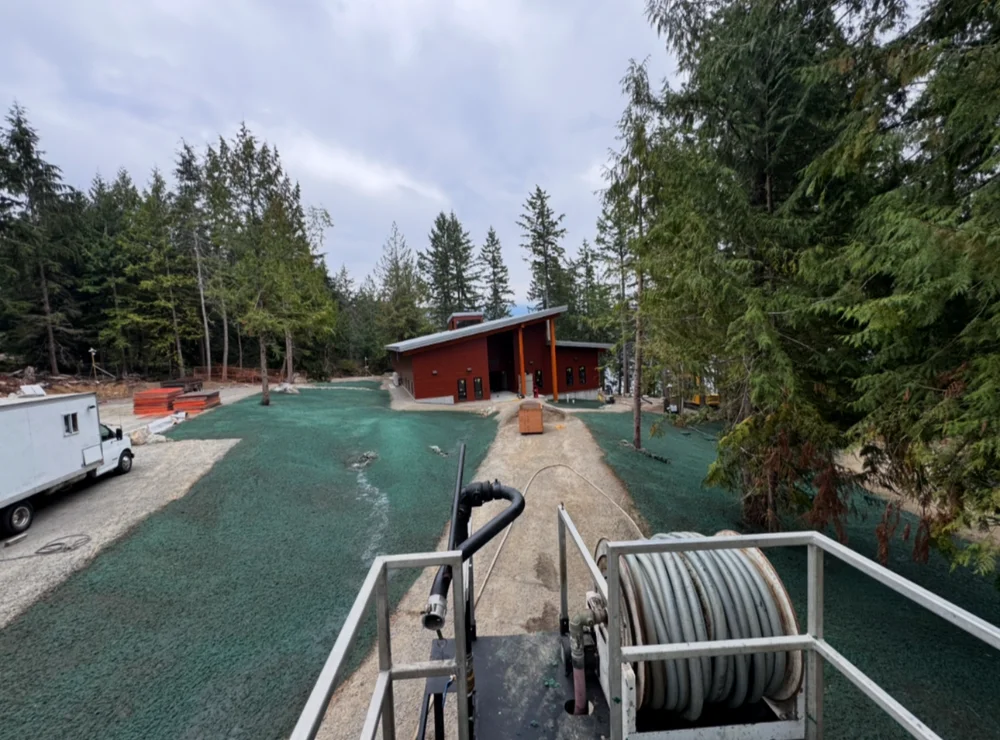
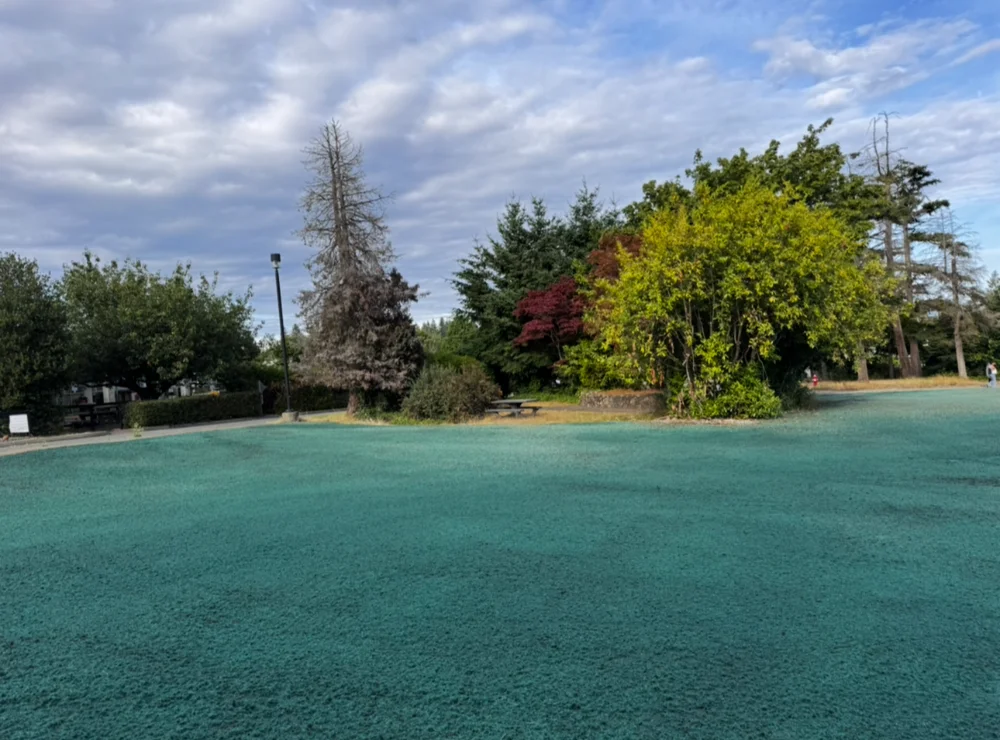
Hydroseeding is a practical alternative to sod for homeowners who want a healthy lawn without the added cost or disruption of pre-grown turf. Instead of rolling out sod, a blended slurry of seed, fertilizer, mulch, and tackifier is applied evenly across prepared soil. This helps lock in moisture, protects seed during germination, and encourages strong root development from day one.
Homeowners often choose hydroseeding over sod because it offers several clear advantages:
-
- More even, natural growth without seams or patchwork
- Better adaptation to local soil, sun, and drainage conditions
- Flexible seed selection based on site conditions and use
- Lower cost for larger or irregular lawn areas
Hydroseeding works especially well for new lawn installations, post-construction sites, sloped properties where erosion control matters, and areas where access makes sod delivery difficult. It’s commonly used after excavation or major landscape work and performs best when paired with proper grading and drainage.
At Victoria Interlock, hydroseeding is never treated as a spray-and-go service. Every installation includes proper site preparation, correct application rates, and timing based on local growing conditions. We’re BBB-accredited with strong local reviews, and our reputation is built on doing the work right the first time so your lawn establishes evenly and lasts.
Wood Fiber vs Cellulose (Paper-Based) Mulch
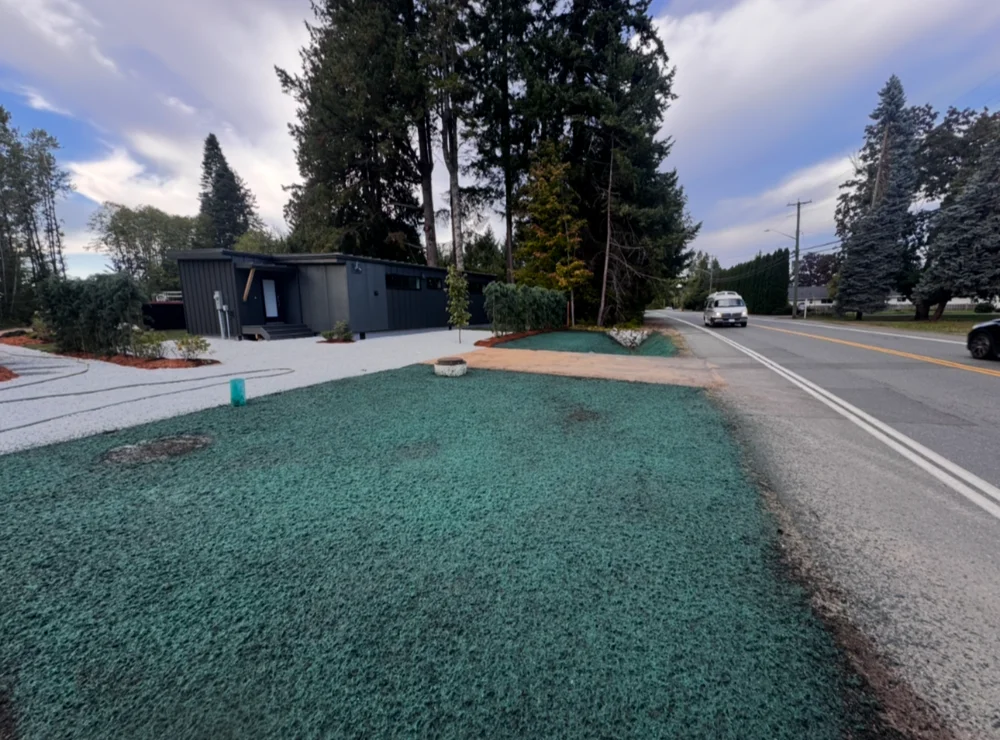
The type of mulch used in hydroseeding plays a big role in moisture retention, seed protection, and erosion control. Mulch isn’t just filler, it helps create the conditions needed for even, reliable germination.
Cellulose (Paper-Based) Mulch: Cellulose mulch is made from recycled paper fiber and is commonly used on flatter, lower-risk areas. It helps hold seed and moisture in place during early growth and works well where erosion is minimal and site conditions are straightforward.
Wood Fiber Mulch: Wood fiber mulch is made from refined wood fibers that form a thicker, more durable cover over the soil. It retains moisture longer and provides better erosion control, making it a strong choice for sloped yards, exposed sites, and areas with drainage challenges.
In British Columbia, hydroseeding is often used as part of erosion control and site stabilization following construction or landscape work. Choosing the right mulch helps ensure the seed stays in place and establishes properly under local weather and soil conditions.
At Victoria Interlock, we select mulch based on the site, not a one-size-fits-all approach. The goal is consistent establishment, strong root growth, and a lawn that holds up long after germination.

Where Hydroseeding Makes the Most Sense
Hydroseeding is often a better choice than sod or traditional seeding when long-term lawn health matters more than instant appearance. It’s especially well suited for:
-
- Large or irregular lawn areas
- Sloped properties where erosion control is important
- New lawns after construction or excavation
- Sites with mixed soil, sun, or drainage conditions
Compared to sod, hydroseeding offers lower cost, better soil adaptation, and uniform growth without seams. Compared to hand seeding, it provides more even coverage, improved moisture retention, and less seed washout during early growth.
If you’re looking for a durable lawn that establishes evenly and holds up over time, hydroseeding is often the most practical option.
Questions About Hydroseeding?
How long does hydroseeding take to grow?
Most hydroseeded lawns begin to germinate within 7–14 days, depending on weather, soil conditions, and seed type. Full, mature coverage typically develops over several weeks.
Is hydroseeding better than sod?
Hydroseeding is often a better choice for larger areas, sloped yards, or properties where cost and long-term root health matter more than instant green coverage. Sod provides immediate results, but hydroseeding typically establishes deeper roots and more uniform growth.
How much watering does hydroseeding require?
Frequent, light watering is critical during the first few weeks. The soil should stay consistently moist, not soaked, until the grass is established. Watering needs decrease as roots develop.
Can hydroseeding be used on slopes?
Yes. Hydroseeding is commonly used on sloped areas because the mulch and tackifier help hold seed in place and reduce erosion during early growth.
What time of year is best for hydroseeding?
Spring and fall are ideal, but hydroseeding can be successful whenever temperatures and moisture levels support germination. Timing is adjusted based on local conditions.
How long before the lawn can be used?
Light foot traffic is usually okay after several weeks, but full use should wait until the grass is well established and rooted.
Is hydroseeding messy?
The applied mulch may look green or brown at first, but it breaks down naturally as the grass grows. With proper application and watering, cleanup is minimal.
Do you prepare the soil before hydroseeding?
Yes. Proper grading, soil preparation, and site conditions are essential. Hydroseeding performs best when installed as part of a complete lawn installation process, not as a spray-only service.
Do you use different seed or mulch depending on the site?
Yes. Seed blends and mulch types are selected based on sun exposure, soil conditions, slope, and drainage to ensure proper establishment.